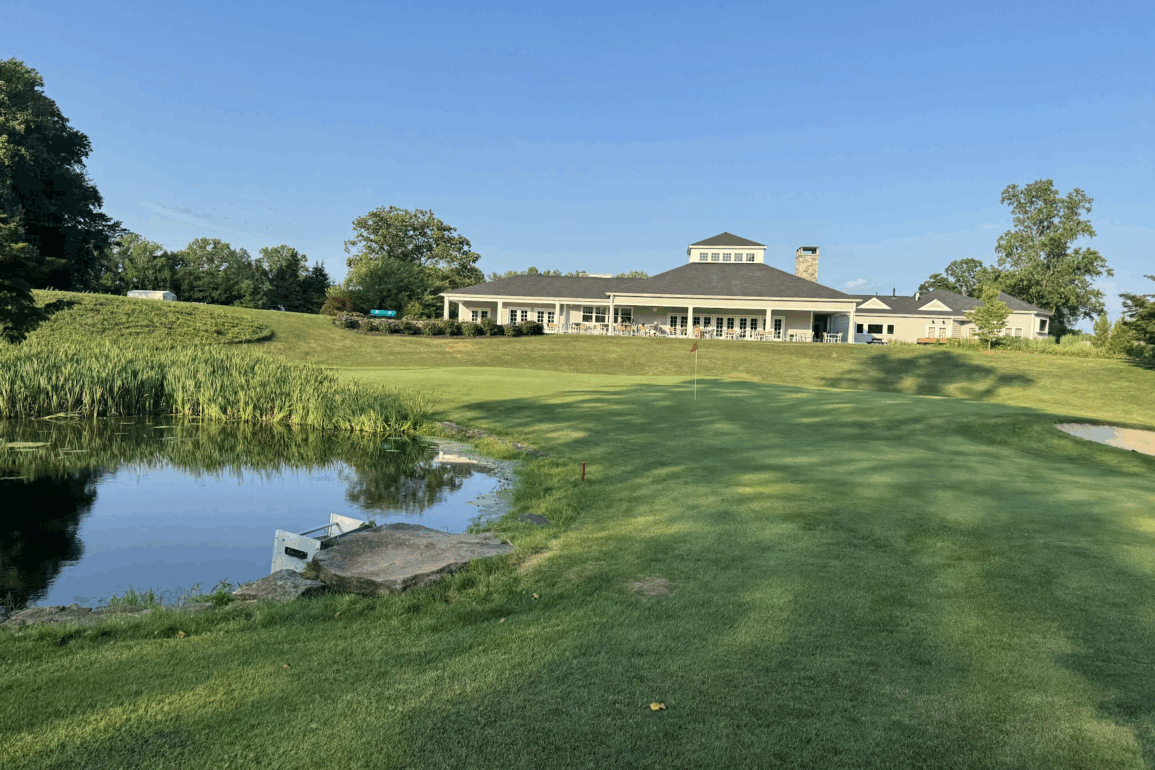
H. Smith Richardson is a public par-72 course measuring approximately 6,734 yards from the tips. The course was originally designed in 1972 (renovated in 2018) and is located in Fairfield, Connecticut.
The property spans a modest footprint, likely under 200 acres, nestled in a mix of suburban woodland and mild rolling terrain. The routing follows a two-loop pattern with front and back nines returning to the clubhouse. A variety of hole lengths and directional changes offer a steady rhythm for players who appreciate strategic interest without overbearing difficulty. Ideal for public golfers seeking a test that rewards both shot placement and course management, H. Smith Richardson leans more traditional than modern minimalist.
Walkability
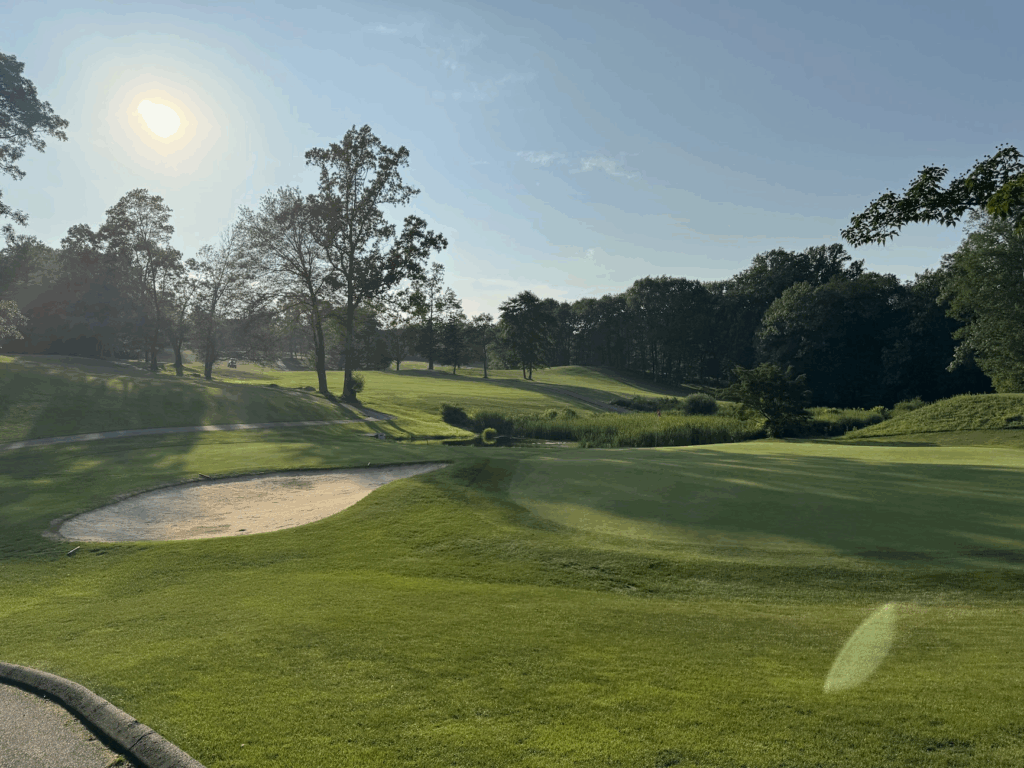
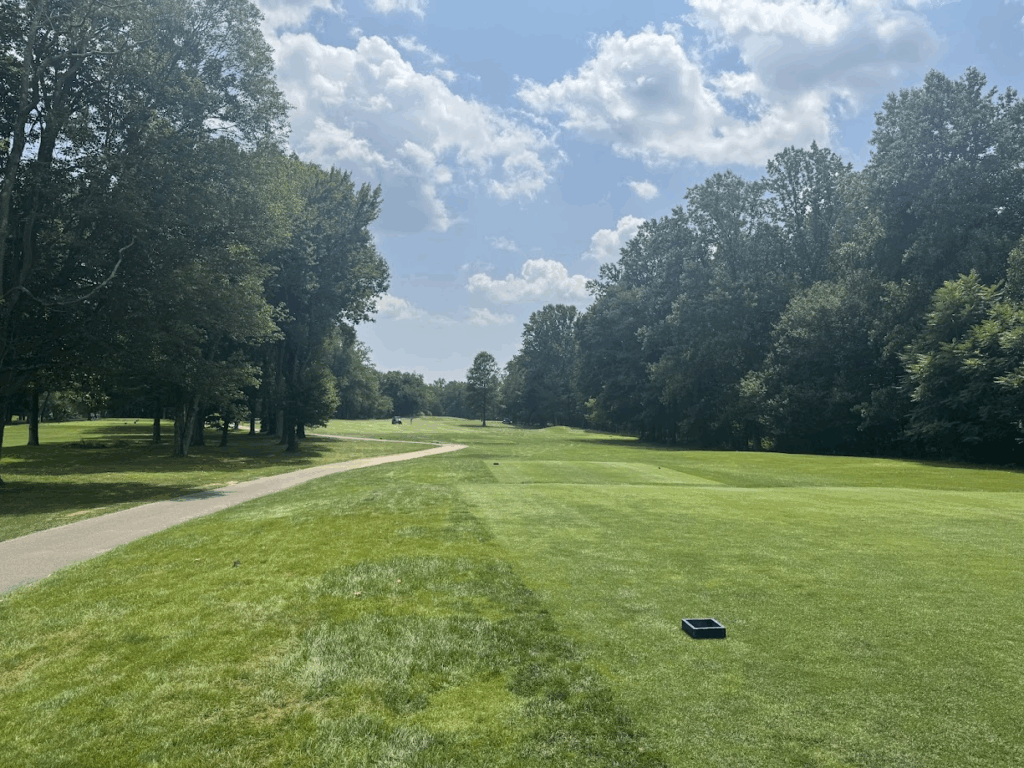
Routing throughout the course is fairly efficient with terrain that’s mild and generally walkable, though a few transitions stand out for their awkwardness. Elevation is subtle across the property, with no severe climbs, and the corridors remain reasonably tight without long hauls between holes. However, the transition from the green at Hole 6 to the tee at Hole 7 can cause confusion — the intended tee is obscured short left behind trees, while the more visible tee on the right belongs to Hole 11. The cart path adds to the disorientation, especially for first-time walkers.
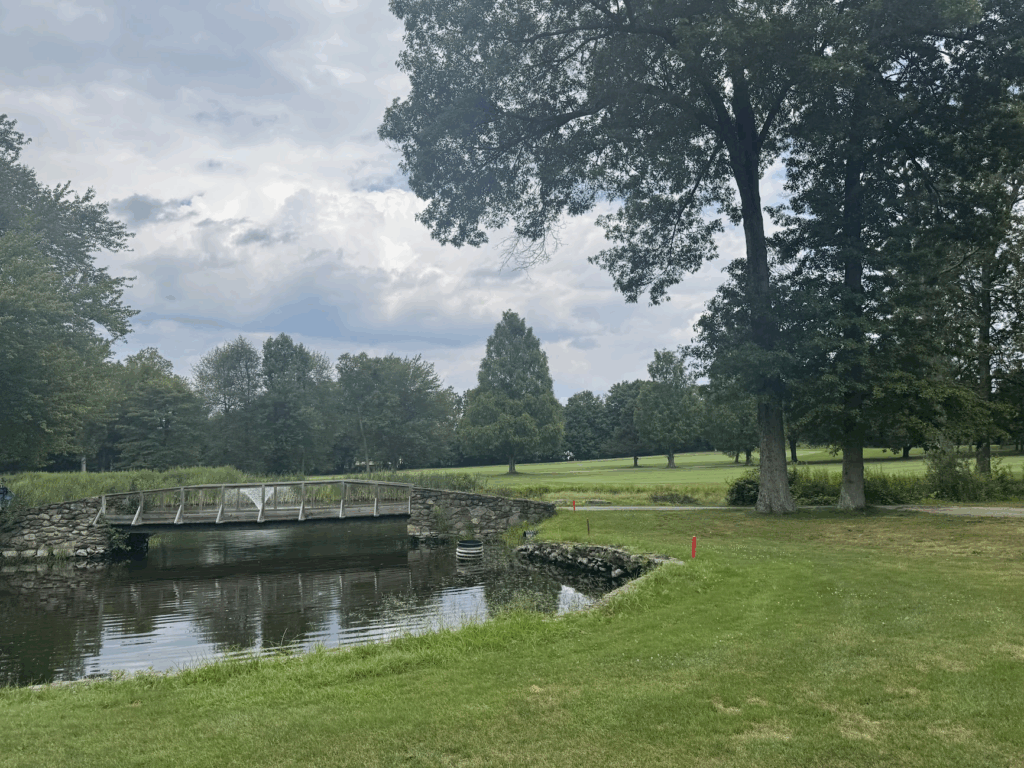
- Pro: The front nine offers a cohesive and balanced walk. The opening stretch from Holes 1–5 flows intuitively, with Hole 3 — a par 3 at 180 yards — forming a central anchor. The transition from 3 to 4 is aided by a picturesque bridge and wooden steps, elevating the walking experience visually and practically.
- Con + Fix: The 6-to-7 walk could be improved by pruning the tree cluster that hides the 7th tee and by rerouting the cart path to more clearly define the flow. Simple wooden directional signs or a small gravel spur could drastically improve clarity without altering routing integrity.
Strategic Test
H. Smith Richardson presents a classic strategic test rooted in angle management and restraint. Many par 4s dogleg slightly, encouraging thoughtful positioning rather than brute force. Hazards are placed with intention, though the back nine could benefit from a greater variety of approach demands.
- Pro: Hole 9 is an excellent example of elegant strategy. At 500 yards, it’s a long par 4 that plays as a soft dogleg right. Players have two main options: a 230–240 yard layup to the corner, leaving a long iron to a green protected left and right by bunkers, or a bold 300+ yard attempt to cut the corner, demanding both precision and power. For low handicappers, a high draw with driver over the right tree line may leave a short iron or even wedge in hand, but the risk of blocking into the trees or rolling out too far into the rough is high. Mid-handicappers are better off playing a 3-wood or long hybrid to the elbow and accepting a long iron into the green — the key being favoring the left side of the fairway for a more open approach. High handicappers should aim for a reliable 200–210 yard tee shot that stays in play, followed by a fairway wood or hybrid just short of the green — letting the short game handle the rest. The green slopes modestly back-to-front, rewarding those who leave an uphill look. This hole perfectly demonstrates how club selection and courage intersect, with shot-shaping, distance control, and angle management all factoring in. Of note, this was my personal favorite hole of the course, and have great memories of a buddy trying and failing to cut the corner.
- Con + Fix: The back-to-back long par 4s at Holes 13 (550 yards) and 14 (426 yards) fall into a redundancy trap. Both feature bunkers pinched left and right just off the green. Reimagining Hole 14 with a centerline bunker 30 yards short would break up visual monotony and force a decision: lay back and fly it, or challenge it with a lower-flight shot that might run out. It would reinject risk-reward nuance into the stretch.
Playability
Overall, the course is quite playable for higher handicaps. Fairways are generous and roughs, while present, are not punishingly thick. There is room to recover from most tee shot misses, and forced carries are rare from the forward tees. However, some tee box orientations and hazard placements disproportionately affect weaker players.
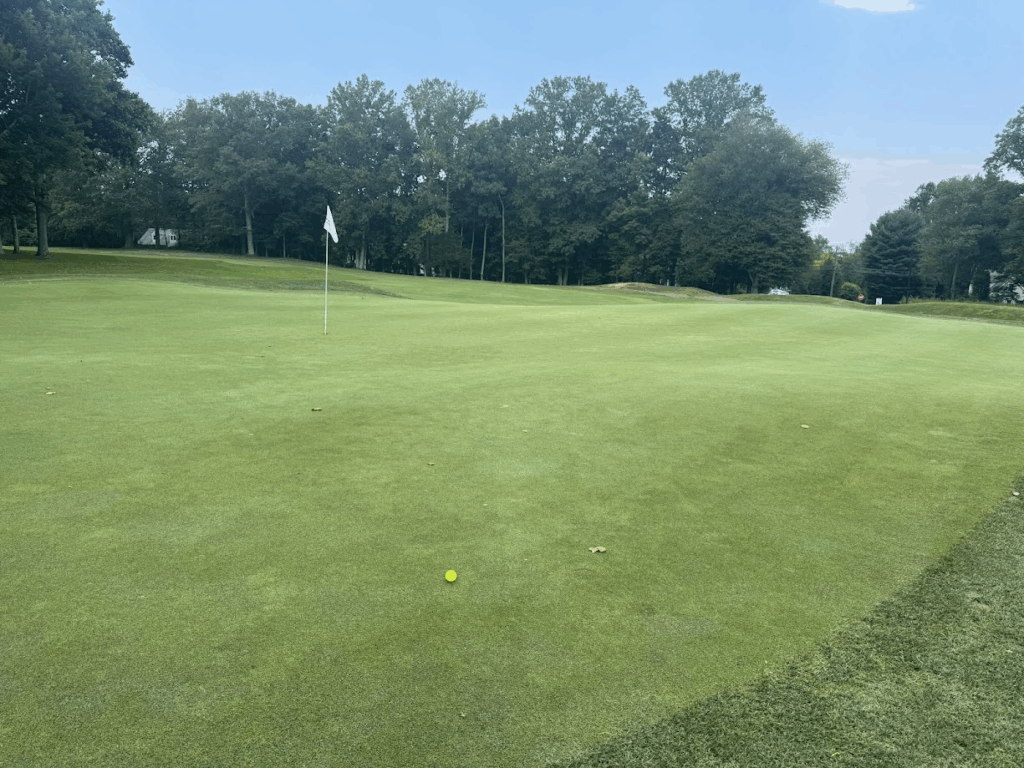
- Pro: Hole 3 is an ideal mid-round breather for less experienced players. At 180 yards from the back but playing significantly shorter from forward tees, it’s a manageable par 3 with a large, receptive green and minimal surrounding trouble. High handicappers can run a low iron or hybrid up the center without fearing heavy rough or water, while better players can aim at a center pin with a mid- to short-iron. The bunkers flanking either side are set far enough back to avoid punishing all but the most offline shots. It’s a hole that builds confidence and keeps the round moving.
- Con + Fix: Hole 5 (410 yards) has a tee box that’s slightly misaligned for slicers, encouraging misses into the adjacent Hole 4 fairway. Reorienting the tee box slightly leftward and planting a staggered row of wispy fescue or native grasses right of the tee line could both visually cue the intended line and catch errant shots before they cross into danger.

Atmosphere
H. Smith Richardson carries a calm, community-oriented ambiance that belies its strategic chops. It’s a classic Connecticut muni: well-kept but not flashy, subtle but not boring. The property feels more expansive than it is, thanks to good use of tree corridors and the occasional elevation drop.
- Pro: Hole 7 is the round’s most memorable moment. From the elevated tee, the par-3 view opens to a lush valley floor framed by dense tree lines and a large sloping green. You can feel the hush of the woods and the height from which you’re hitting, giving the hole a mini-mountain-course vibe. The combination of drama and playability makes this a signature moment.
- Con + Fix: Holes 13 through 15 lack distinctive features. They blur together in tone and structure. Adding a water hazard or even just a fescue-framed waste area to one of these holes would help distinguish them visually and thematically, and might enhance the sense of journey on the back nine.
Final Word
Pace of play was stellar during our visit — a rarity at many public tracks. The starter provides a pacing guide that lets you know exactly where you should be at various times based on tee time. It creates subtle accountability and it works. Rangers were active, respectful, and effective. The bridge near Hole 3 adds a charming and serene architectural flourish that elevates the front nine’s walkability and aesthetic.
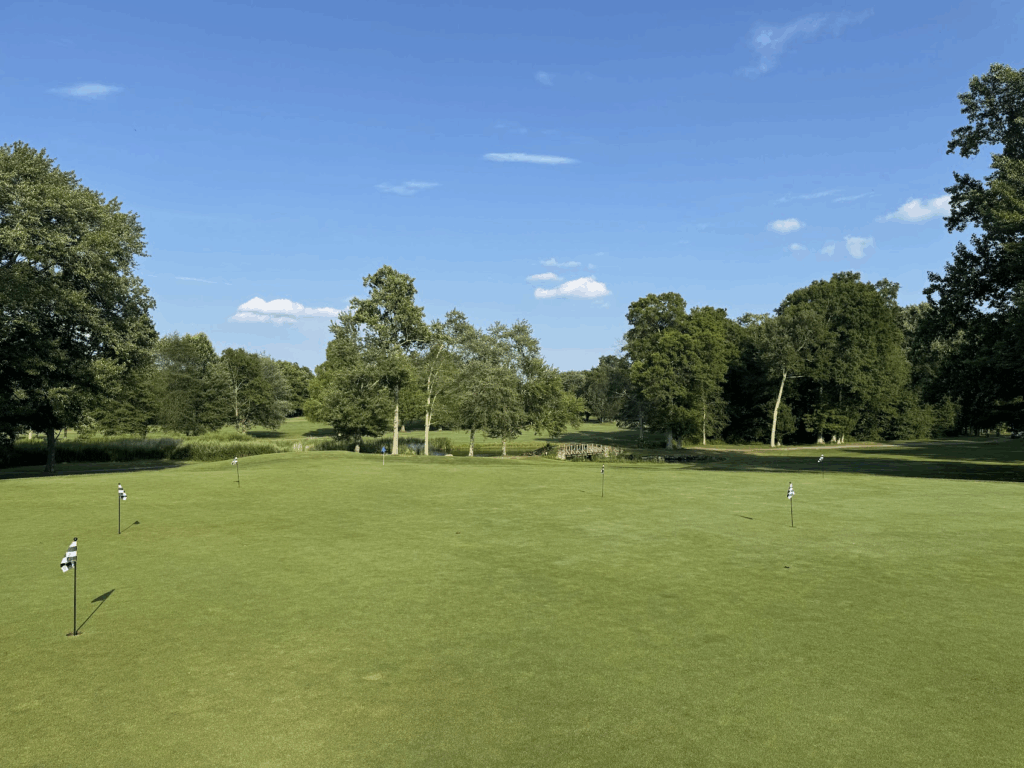
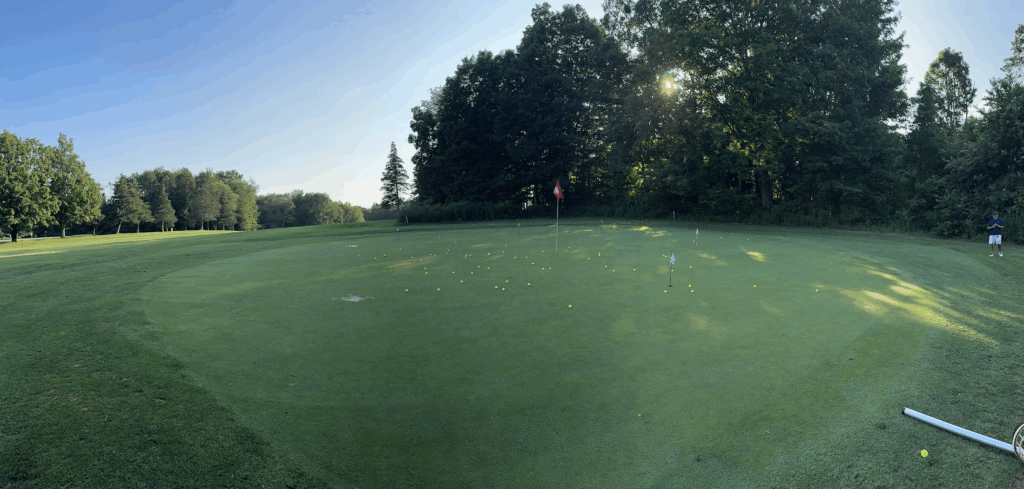
The facility as a whole is excellent. The clubhouse has a refined but welcoming feel, with a proper restaurant (not just a grill hut), a separate chipping area, an excellent driving range and a large putting green. Compared to nearby options like the more confined Carl Dickman Par-3 or the large-scale, flatter Fairchild Wheeler, H. Smith Richardson strikes the right balance of challenge, pace, and flow. It’s not showy, but it’s smart. Not everything lands — the late back nine is visually bland and there are no great water features like Longshore or Whitney Farms — but there’s a backbone of good architecture here that anchors the experience. Of note, it’s very difficult to get a tee time here, but once you do, it is a great experience. Highly recommend.

David is an avid golfer who loves walking Connecticut’s courses and playing alongside his family. He’s passionate about golf course architecture and one day hopes to play at Pebble Beach.