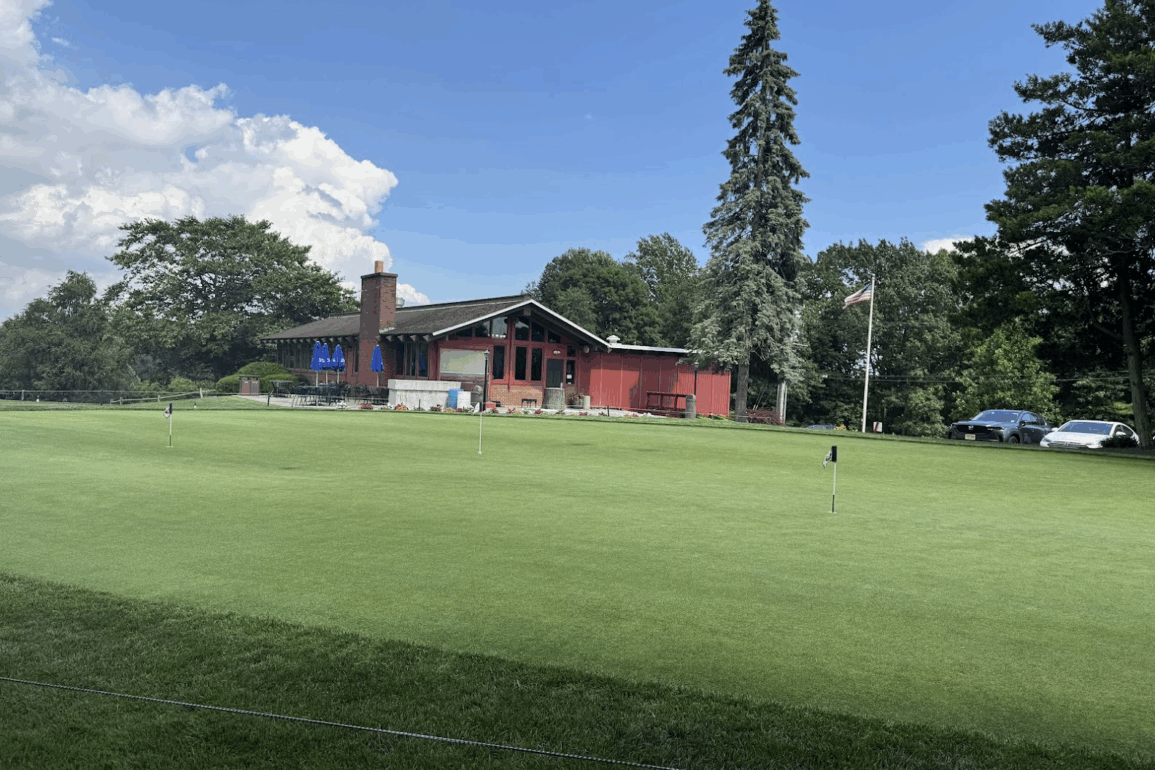
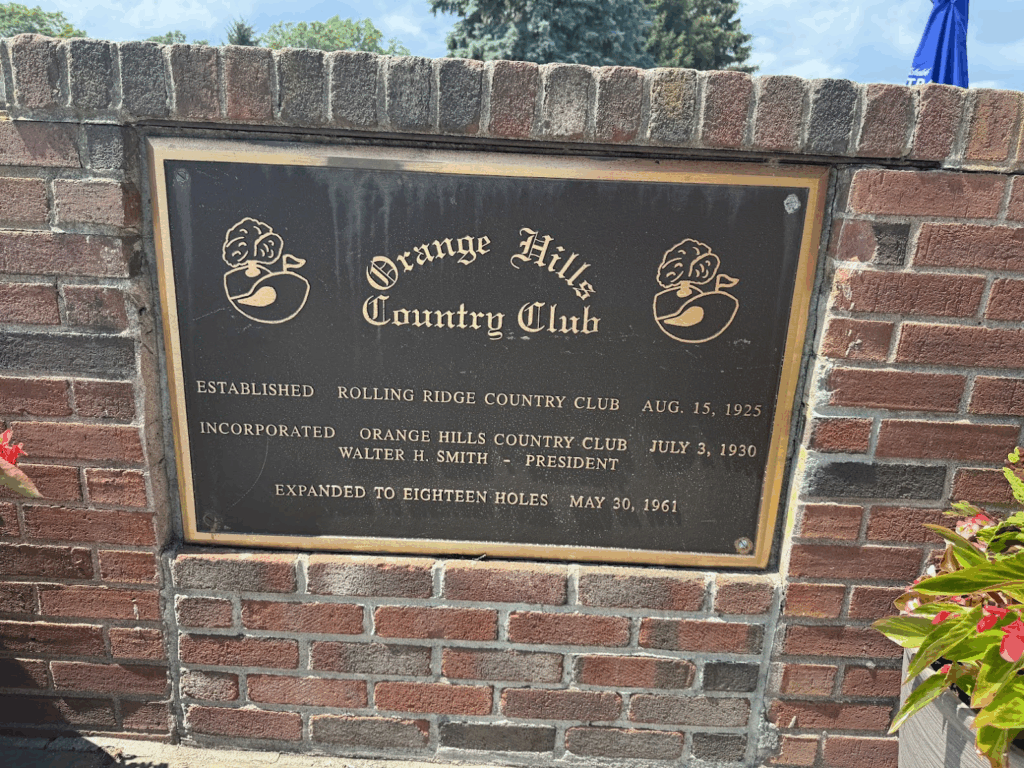
Orange Hills Country Club is a public par-71 course measuring approximately 6,511 yards from the tips. The course opened in 1921 and is located in Orange, Connecticut, just inland from New Haven.
Sitting on what feels like roughly 150-175 acres, Orange Hills features rolling inland terrain, a traditional out-and-back routing on the front nine, and a more varied loop on the back. Players will encounter classic parkland framing, a mix of elevated and flat greens, and a few spots where the land creates compelling shot challenges. This is a course that suits players who enjoy alternating between driver-heavy strategy and more precise, positional play. It leans more toward the casual walker and high-handicapper than a tournament-ready layout, but rewards good shotmaking in subtle ways.
Walkability
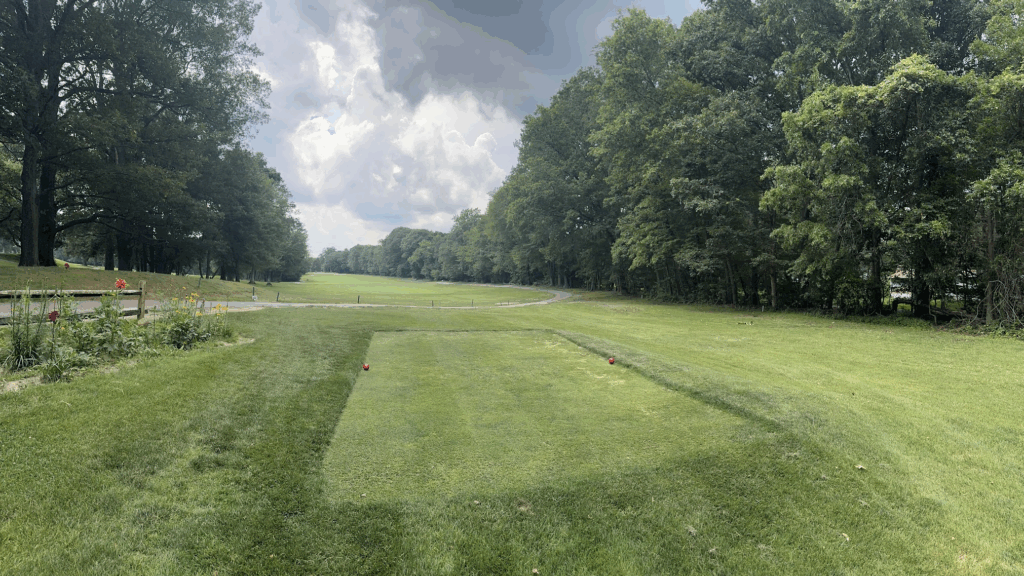
Orange Hills plays well on foot, especially for a property of its size and layout age. Most green-to-tee transitions are short and intuitive, especially on the front nine, where the loop has a pleasant rhythm. The course uses the terrain’s gentle undulations to create flow, with only minor elevation climbs, making it comfortable for walkers with either a pushcart or carry bag.
- Pro: The opening stretch from 1 through 6 moves fluidly across the terrain, with greens and tees nestled in natural spots. The transition from the 6th green to the 7th tee (about 40 yards) is shaded and pleasant, and holes 10 through 13 are similarly compact. The back nine offers a nice mix of elevation and rest, especially as players turn into the closing stretch.
- Con + Fix: The transition from hole 8 to hole 9 is a bit disjointed—players must cross a small lane and visually realign to a tee tucked behind trees. A modest clearing or better signage would ease the transition. Similarly, from 13 to 14, the tee is tucked behind brush and not visible from the green. Trimming back foliage and adding a directional post would solve the issue without architectural changes.
Strategic Test
Orange Hills is deceptively complex. The front nine is a friendly warm-up, with holes like 1 (404 yards) and 3 (164 yards par 3) offering straightforward scoring chances. But once players hit the back, the routing tightens, trees narrow the corridors, and fairway orientation becomes more important. While not a course with aggressive centerline bunkering or multi-option tee shots, Orange Hills challenges players to control their angles and shot shapes. Greens are mostly modest in contour, but placement and slope often force thoughtful approach play.
- Pro: Hole 15 (357 yards) is one of the most underrated strategic tests on the course. The tee shot plays slightly uphill to a fairway that bends right-to-left, with thick tree lines pinching both edges at around the 220-yard mark. The temptation is to hit driver and clear the left bend to leave a flip wedge in, but that line is narrow and risky. The fairway falls off slightly left toward tree jail, while the right side leaves a blocked angle due to a protruding oak. Savvy players will lay back with a 3-wood or hybrid to about 220 yards, favoring the inside right edge. From there, the ideal approach is a 120-130 yard wedge that can carry the front false edge and hold a narrow, slightly elevated green. The green itself is pitched subtly back-to-front and left-to-right, adding to the precision required. In match play, it becomes a decision hole—do you press with a bold tee ball or hang back and out-execute? It embodies risk-reward without requiring forced carries or hazard-heavy gimmicks.
- Con + Fix: Hole 12 (383 yards) lacks definition and strategic complexity. The landing area is wide, the green is large and mostly flat, and there is minimal hazard or shaping incentive to play one side over the other. Introducing a centerline bunker or flanking fairway bunker on the left side would create a decision point off the tee, rewarding those who can shape shots and penalizing overaggression. A green expansion to the rear left could also enhance pin diversity. Contouring the putting surface to introduce tiers or falloffs could deepen the mental game required on approaches.
Playability
For higher-handicap players, Orange Hills offers a mostly fair test. Yardages are moderate, and most greens are receptive to run-up shots. Outside of a few rough patches and tight tree corridors, the course avoids major punishment.
- Pro: Hole 10 (215 yards) may appear long, but the downhill slope and open-front green make it approachable for shorter hitters. There’s a gentle bailout short-right, and a tee shot that flies 170 yards can easily run up to the putting surface. This hole provides a strong sense of challenge without overt penalization.
- Con + Fix: Hole 4 (464 yards) and 5 (365 yards) share a wide, unprotected fairway corridor, making it easy for a mis-hit from one to enter the other. This can be confusing and dangerous, especially for less experienced players. Installing a staggered tree line or low rough berm between the two would clarify directionality and reduce cross-play. Holes 17 and 18, while solid tests, finish the round with consecutive long par 4s (435 and 472 yards), which can feel like a slog for shorter hitters. Adding forward tees under 350 yards for each would make the closing stretch more inviting.
Atmosphere
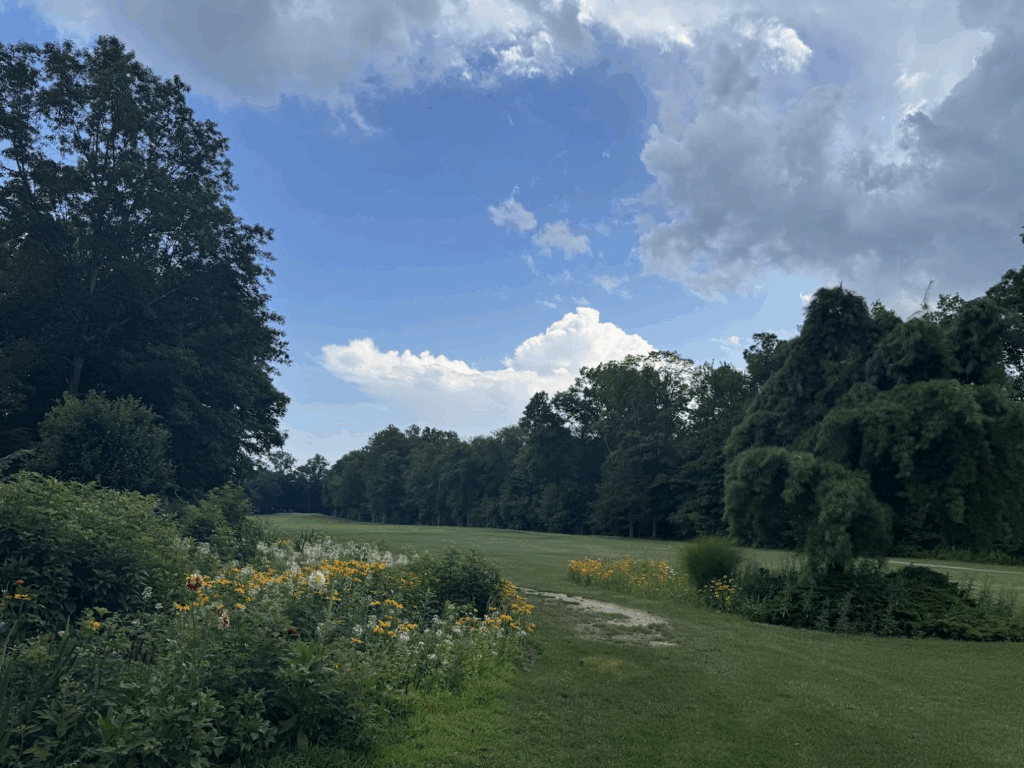
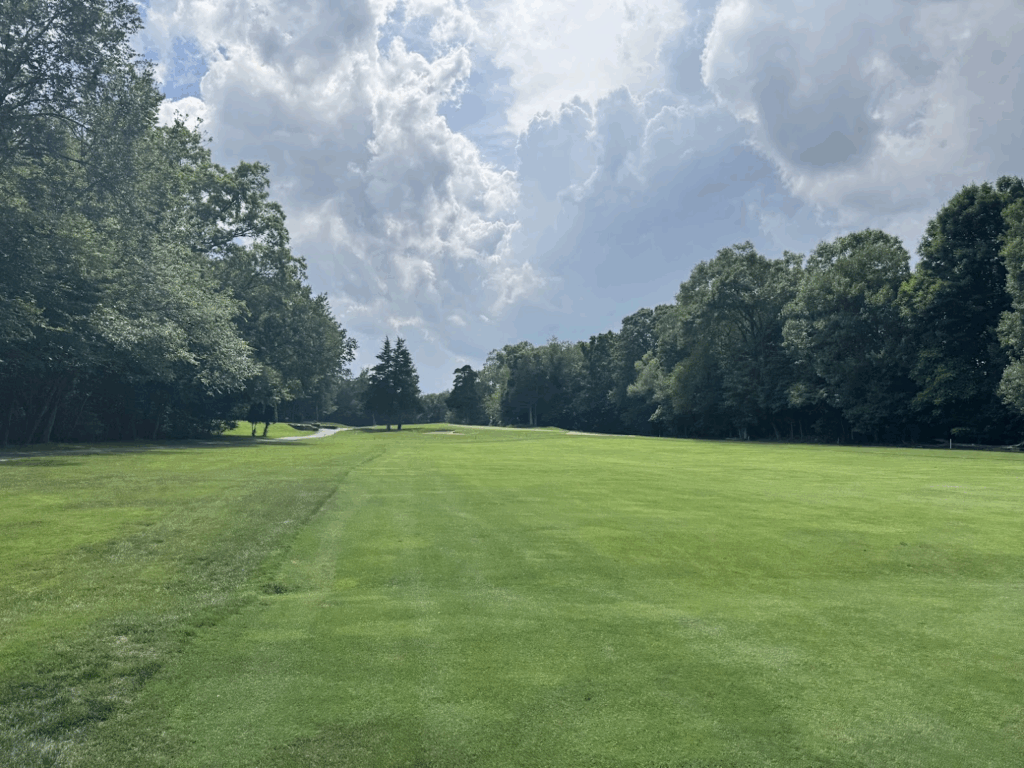
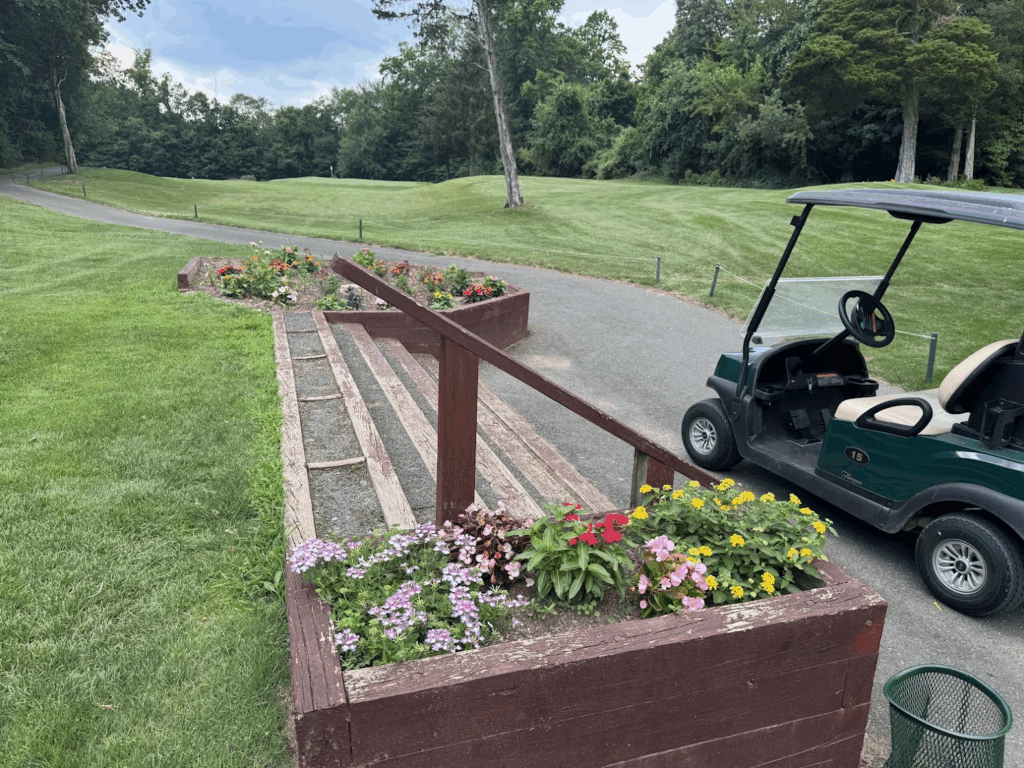
Orange Hills presents as a modest, local gem with a grounded vibe. There are views of inland Connecticut woods throughout, with most holes framed by hardwoods and quiet surroundings. That said, upkeep and small maintenance issues can break immersion. I especially loved the flowers that were planted throughout the course—bright annuals near tee boxes, flowering bushes behind greens, and pops of color that made even transitional areas feel tended to. The end of Hole 5 stands out as a picturesque highlight: the green is nestled in a quiet glade, surrounded by mature trees with filtered light breaking through the canopy—truly one of the most beautiful corners of the course.
- Pro: Hole 2 (501 yards) is a lovely tree-lined par 5 with a slight descent and natural framing. It winds through a wooded corridor that feels secluded and immersive. Players walk downhill into a quiet basin before turning uphill again—a rewarding and memorable journey.
- Con + Fix: Some carts contain heavy ash residue and overall cleanliness can vary, detracting from the round’s feel. In wooded areas like 2 and 14, midges and black flies can be problematic. Simple fixes include more consistent cart cleaning protocols and adding citronella torches or repellant dispensers at tee boxes in high-bug areas.
Final Word
I came into Orange Hills not expecting much, but found a thoughtful layout with a clear rhythm. The front nine invites a relaxed pace with wider corridors and scoreable opportunities. The back nine demands more precision, especially from holes 13 onward where the trees tighten and the greens shrink. Despite some rough edges in cart upkeep and routing quirks, there is an undeniable charm to this course.
Compared to nearby layouts like The Vue (longer but more repetitive) and Orchards Golf Course (shorter but less strategic), Orange Hills hits a rare sweet spot. It plays like a home course you want to learn and master over time, especially if you enjoy walking and thinking your way through a round. For $40-60 range public golf, it rewards repeat play and offers a balanced test for both casual and serious players. I’d love to see a few minor tweaks to improve strategic interest and tee variety, but it’s already one of the most compelling semi-hidden tracks in New Haven County.

David is an avid golfer who loves walking Connecticut’s courses and playing alongside his family. He’s passionate about golf course architecture and one day hopes to play at Pebble Beach.