

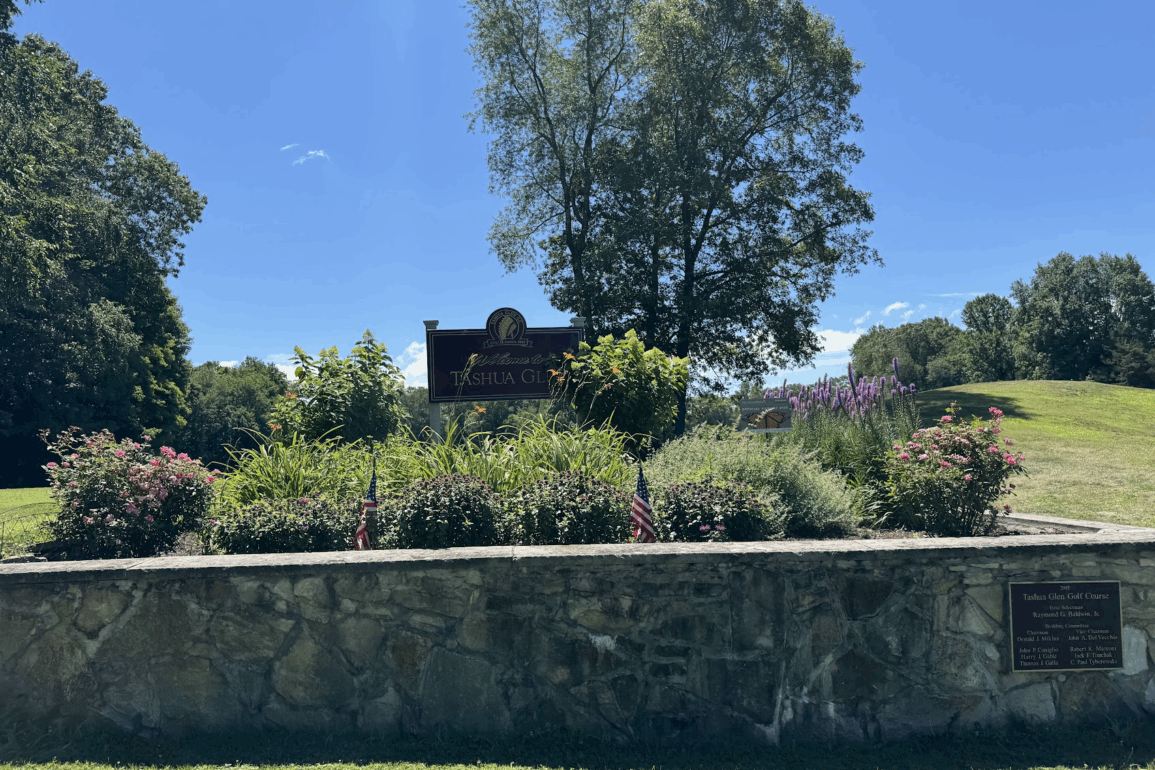
Tashua Glen is a public par-33 course measuring approximately 2,183 yards from the tips. The course was originally designed in 1976 by Al Zikorus and is located in Trumbull, Connecticut.
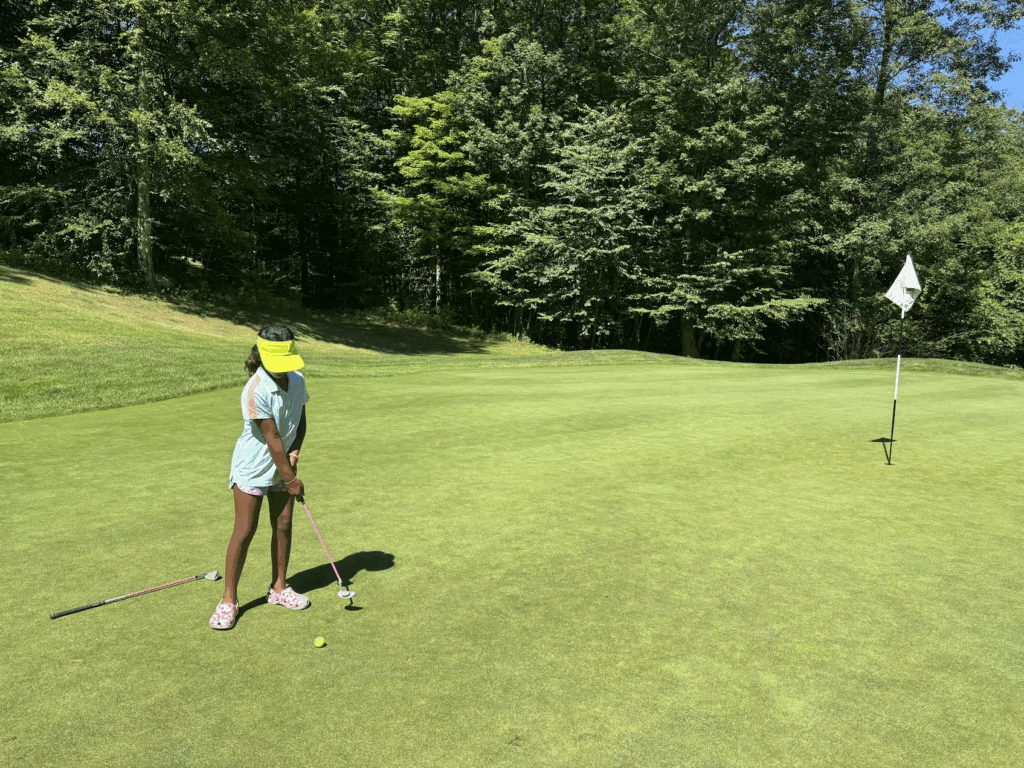
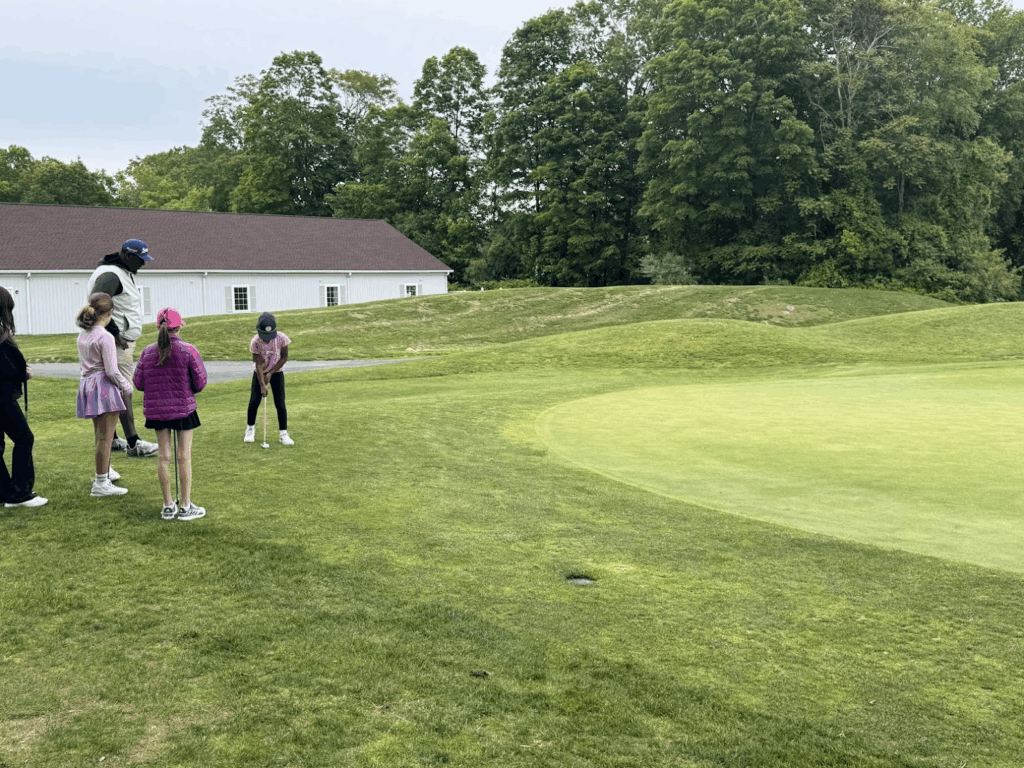
Tucked within the larger Tashua Knolls complex, Tashua Glen is a compact, well-maintained nine-hole layout that punches above its weight for charm and variety. The routing makes efficient use of a relatively tight parcel, incorporating short par 4s, a reachable par 5, and a few testy par 3s. Elevation changes, small push-up greens, and tight tree-lined corridors create an engaging experience for players of all ages. I especially love playing this place with my kids—the Glen serves as both a proving ground and a casual walkable loop for a quick nine. My kids have been learning the game here, and it’s one of the few public courses in Connecticut with a dedicated chipping area, which makes a big difference in skill development. The putting green is also excellent—smooth, well-kept, and large enough for varied practice.
Walkability
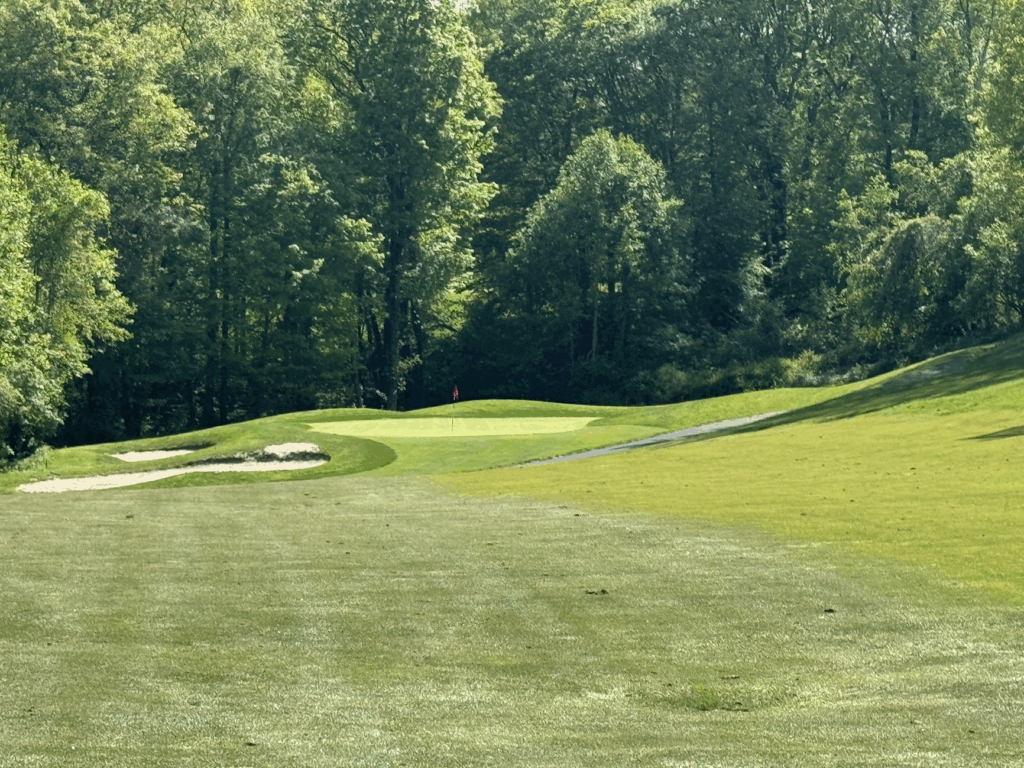
Tashua Glen sits on a modest footprint—under 50 acres—and routes its nine holes with efficiency and just enough elevation change to keep things interesting. While most green-to-tee transitions are brief, the mild climbs on Holes 3 and 8 can offer a bit of a workout. Tree-lined corridors frame most of the layout and buffer the player from adjacent traffic and holes. The routing follows a mostly looping pattern with minimal backtracking.
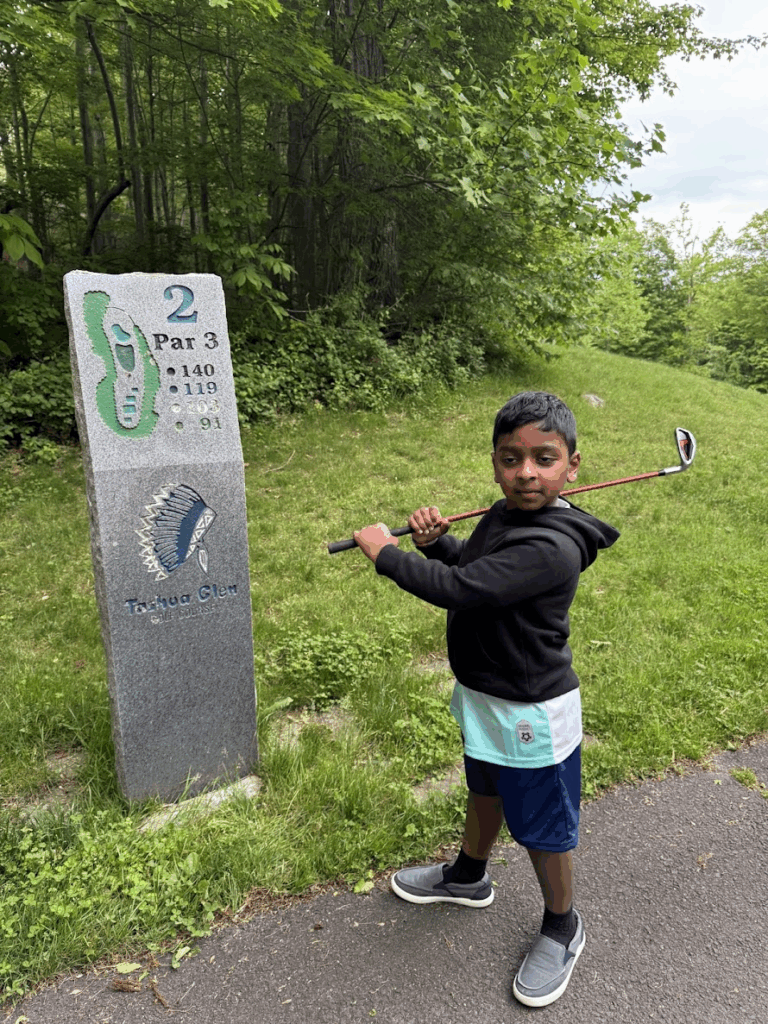
- Pro: The opening stretch of 1 through 3 forms a tight, breezy walk—especially 2 and 3, which are reachable with short irons and funnel naturally into one another. Hole 2’s walkable 140-yard distance and quick segue to 3 makes it ideal for a family loop.
- Con + Fix: The greens for Holes 1 and 6 sit unusually close together, which can be confusing for newer players or kids still learning green etiquette. While it doesn’t interrupt the flow, it does create a convergence that could be eased by adding subtle ground contouring or signage to signal direction more clearly. That said, if the course is empty, I actually enjoy taking another loop from 6 back to 1 for bonus swings.
Strategic Test
The Glen isn’t meant to be Pine Valley, but for a nine-hole course under 2,200 yards, there are genuine decision points to navigate. Several holes provide optionality through risk-reward club selection and small push-up greens that challenge wedge distance control. The routing doesn’t just alternate par types—it alters angles. Fairways bend both directions, and there’s an emphasis on positional awareness, not just raw distance.
- Pro: Hole 9 is the most tactically rich of the bunch. At 460 yards, this par 5 is reachable in two for longer hitters, but it demands disciplined execution. The tee shot presents a subtle left-to-right dogleg with overhanging limbs left that can knock down overdrawn balls. A bold line over the left corner opens up a more direct second shot, but the risk of tree trouble is high. A fairway wood played straight at the 200-yard mark leaves a downhill lie and a tempting decision: carry the ball 220+ with a hybrid or lay up short of the green-side mounding and pitch in. The green itself is modestly elevated and slightly angled, with a left-to-right slope that rejects short or left approaches. Bail-out areas short-right provide a safe landing but leave a fiddly uphill chip. The hole becomes a mirror on your commitment and ball control. Players who shape shots left-to-right off the tee and right-to-left into the green gain a strategic edge, but poor placement invites bogey or worse.
- Con + Fix: Hole 4, a 140-yard par 3, feels like a missed opportunity. It plays similar in shape and yardage to Hole 2 and lacks defining hazards or contour features. A front-right bunker or slightly raised rear shelf could enhance the shot value and create visual separation.
Playability
This is where Tashua Glen really shines. The course is incredibly playable for beginners, high-handicap players, and those looking to improve their short game in a stress-free environment. Nearly every hole gives a fair chance at a clean shot—even when teeing off with limited carry distance. There are no forced carries, the fairways are relatively generous, and the rough is kept playable. Greens are small but mostly accessible via low-running or aerial approaches, making recovery options reasonable for those who miss.
- Pro: Hole 7, a 300-yard par 4, is an excellent example of how shorter holes can still provide a fair and rewarding test without intimidation. A slight downhill grade and wide landing area off the tee encourage aggressive driving, but a shallow green framed by subtle mounding places a premium on wedge control. Players who miss long will find themselves in a tricky recovery position, while those who leave the ball short have a straightforward pitch. There’s no water or forced carry, and the hole allows both bombers and bunters to find a strategy that suits their game. It balances confidence with consequence in a way that welcomes repeat attempts.
- Con + Fix: Hole 5 at 325 yards plays a bit uphill and tends to collect short tee shots in thick grass along the right. For shorter hitters, especially those who can’t carry beyond 150 yards, this becomes a frustrating barrier. Widening the fairway corridor slightly on that side or trimming the primary cut rough into a gentle apron at the 130–160 yard zone could maintain challenge without punishing less powerful players.

Atmosphere
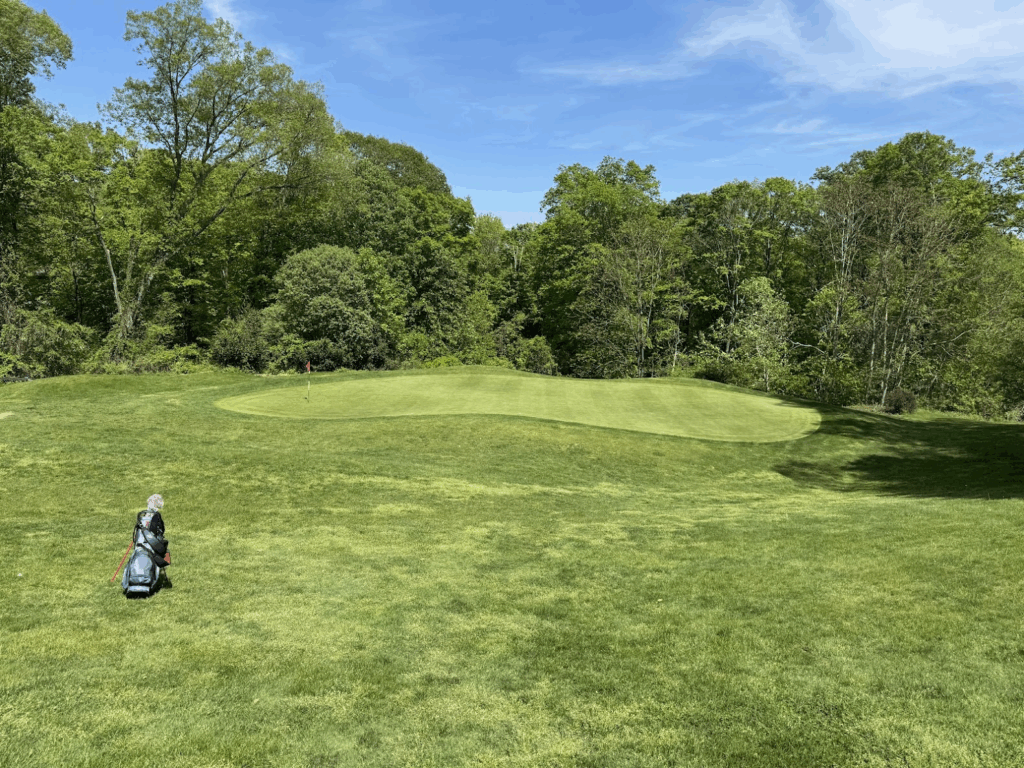
The setting is peaceful and suburban, with enough elevation changes and forested buffers to give it an immersive feel. Maintenance is consistent year-round, and while the Glen doesn’t have the architectural pedigree of its big brother (Tashua Knolls), it has a welcoming vibe all its own.
- Pro: Hole 8 stands out. It’s a 110-yard par 3 with a green perched on a bluff that doesn’t look dramatic from satellite view, but in person the elevation is real. Teaching kids to chip uphill or flight a short iron to an elevated target is one of the joys of this hole. It’s scenic, quiet, and always memorable.
- Con + Fix: Holes 2 and 4 mirror each other in look and feel, which creates some visual monotony. Adding a small pond or mounding near the green on one of them would not only diversify aesthetics but also reinforce different shot shapes.
Final Word
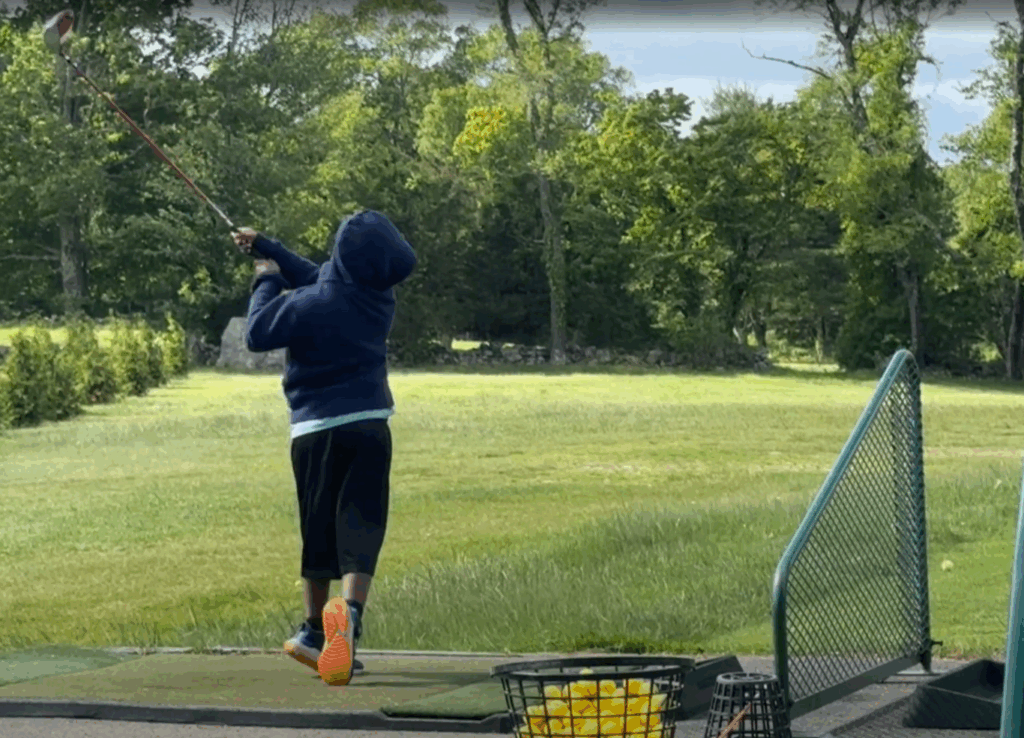
Tashua Glen fills an important niche in Connecticut public golf. It’s not quite as beginner-oriented or breezy as Carl Dickman Par 3, where I can zip through nine holes in under an hour, but it offers a more complete test and an essential stepping stone before moving up to a full-length course like Longshore. It’s a course where you can start to introduce real club selection decisions, shaping shots off the tee, and learning how to adjust to elevation. The practice facilities—especially the dedicated chipping area—are better than what most public tracks offer, and the conditioning remains reliable throughout the season. I’ve walked this loop more times than I can count, and it continues to offer value both as a training ground and a relaxing round. I’ll keep coming back.

David is an avid golfer who loves walking Connecticut’s courses and playing alongside his family. He’s passionate about golf course architecture and one day hopes to play at Pebble Beach.






Great junior program best in Connecticut. Coach Bart is fantastic